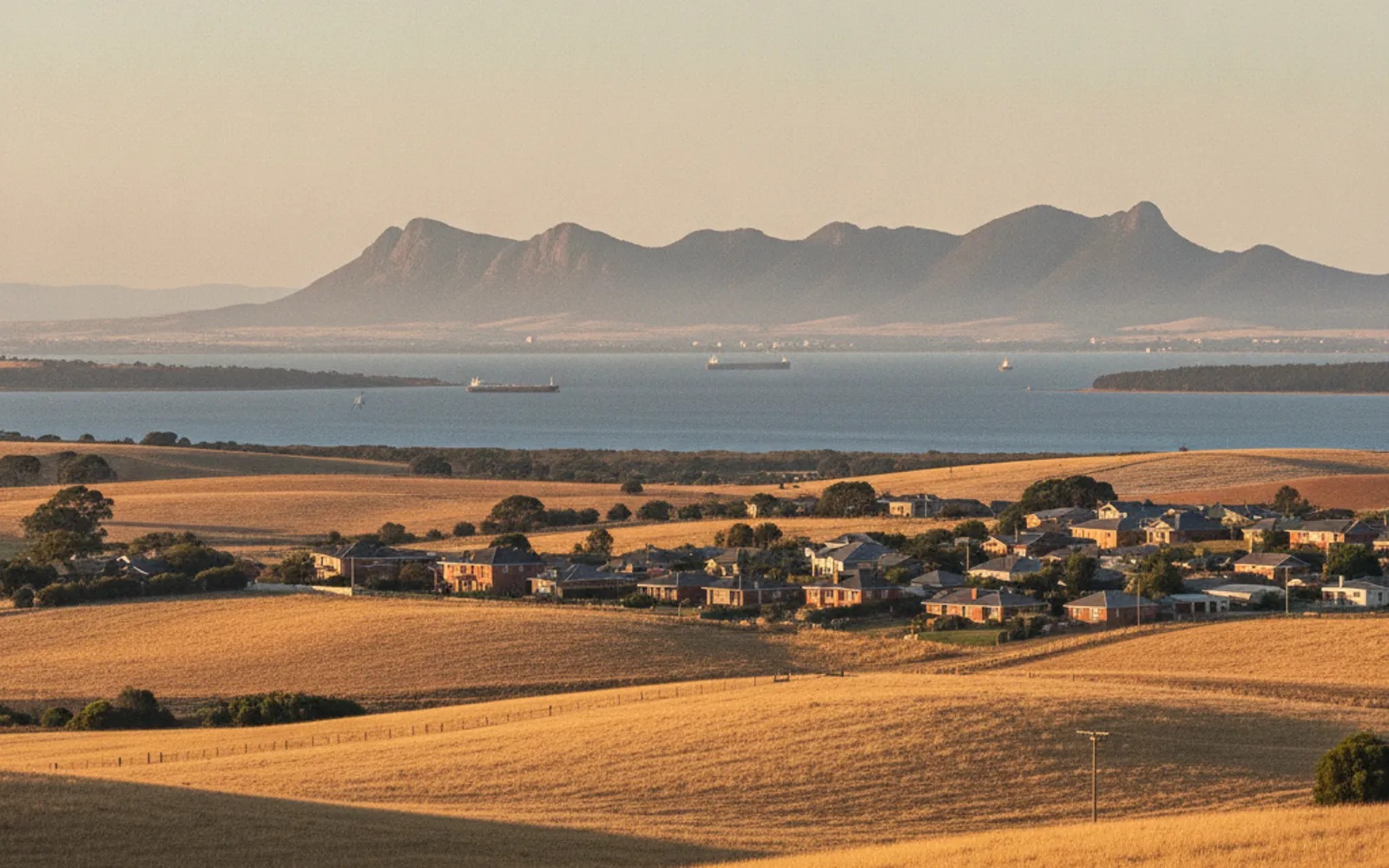
The only landfill in the Barwon region licensed to take asbestos sits here in Drysdale, which makes disposal simpler from this end of the Bellarine than almost anywhere else in the region. If you are not sure what the sheeting is, get it tested before you touch it.
Drysdale and Clifton Springs sit on the northern Bellarine, and a lot of the housing here went up while asbestos cement was ordinary building material. It was standard in Australian homes from the mid-1940s until the late 1980s, and the national estimate is that it is still present in one in three homes. If your place was built or extended before 1990, the back fence, the garage roof, the eaves lining and the sheet behind the bathroom tiles are all worth a second look before anyone puts a tool through them.
Barwon Asbestos Co is not a removal company and holds no licence. What we do is get the material identified and put you in touch with licensed asbestos removalists working across the Bellarine, and their WorkSafe Victoria licence number appears on the quote you receive. You deal with them directly. Call 0480 XXX XXX, or send a photo of what you are looking at and we will point you to the sensible first step, which is usually a test rather than a removal quote.
Nobody can tell fibro from plain cement sheet by eye, and a builder or a pest inspector cannot either, so a sample goes to a NATA accredited laboratory. Published Victorian rates run $88 to $160 per sample, and most houses need three to eight samples, because a fence, an eaves lining and a bathroom sheet count as three different materials.
Old fibro boundary fences are the job we hear about most from Drysdale and Clifton Springs, and a cracked or crumbling sheet matters far more than an intact one. Published Victorian whole fence jobs run $1,000 to $3,500, and a full boundary line is well past anything that can be taken on unlicensed.
Super Six roofing on garages, sheds and the odd farm outbuilding on the land behind Drysdale is the higher risk work, because the sheets are brittle and the first instinct is usually to water blast them. Published Victorian roof removal runs $40 to $120 per square metre, with a garage or small roof at $3,500 to $5,500.
Drysdale Landfill is the one site in the Barwon region on EPA Victoria's register of landfills licensed to receive asbestos, and it takes small domestic quantities only, capped at a 6 by 4 trailer load. Fees apply, the council does not publish the asbestos figure, and you need to ring (03) 5251 2935 before you turn up with a wrapped and labelled load.
Drysdale grew as the service town for the northern Bellarine and Clifton Springs spread out from bayside holiday houses, so between them they hold a lot of post-war and 1960s to 1970s stock, plus sheds and outbuildings on the farmland behind. In houses of that age the usual places to find asbestos cement are the boundary fence, the garage or shed walls, corrugated roof sheeting, eaves linings, wall sheet in bathrooms and laundries, and vinyl floor tiles hiding under carpet. None of that is a reason to panic. It is a reason to know what you have before a renovation starts.
The dates do most of the work here. Asbestos cement was manufactured in Australia from the 1920s and used routinely in building materials from the mid-1940s to the late 1980s. Blue and brown asbestos and asbestos-containing products were banned in the mid-1980s, white asbestos products in December 2003, and the total ban on manufacture, supply, use and sale came into force on 31 December 2003. There is no single cut-off year that proves a house is clear, which is why a pre-1990 build gets checked rather than assumed.
Most people reach us at one of two moments: a renovation or demolition is about to start, or a building and pest inspection has flagged something before settlement. In both cases condition is what matters. Sheeting that is intact, painted and left alone is a different situation from sheeting that has cracked, been storm damaged or already been broken, and a lab result is what tells you which one you have.
EPA Victoria keeps a statutory register of landfills licensed for asbestos waste. It lists 26 sites across the whole state, and exactly one of them is in the Barwon region: the City of Greater Geelong landfill at Drysdale. No Surf Coast, Colac Otway, Golden Plains or Queenscliffe site appears on that register at all, and neither does any commercial operator in the Geelong area.
That has a practical result most locals have already worked out. Surf Coast Shire says plainly that asbestos roofing sheets and building products are not accepted at any transfer station in the shire, and its Anglesea and Winchelsea pages send residents to Drysdale instead. Golden Plains sends its residents off shire, and the Borough of Queenscliffe runs no tip of its own. So a load from Torquay, Anglesea or Bannockburn ends up driving past your street to get here.
If you are taking a small domestic load in yourself, the rules are not complicated but they are firm. Ring the landfill on (03) 5251 2935 first, because an authorised site can still decline a load and staff may want you booked in. Wrap the material in polythene sheeting around 200 micron thick and seal it with tape, lay two layers of polythene in the cargo area of the vehicle, keep bundles small enough to handle easily, and mark every package with the asbestos warning label. Asbestos never goes in a general skip, a kerbside bin or a council hard waste collection, and a licensed removalist's quote normally covers disposal so none of this lands on you.
Victoria is not a model WHS state, and the rules people copy across from New South Wales are wrong here. The OHS Regulations cap unlicensed removal at 10 square metres of non-friable material and no more than one hour of removal work in any seven day period, and both caps have to hold. They bind employers and self-employed people at workplaces, so at your own home they do not apply, because a home is not a workplace. WorkSafe still recommends homeowners follow the same code, and those caps become law the moment a tradesperson, a tenant, a rental property or a paid helper is involved.
Held against a real job the caps answer themselves, because a boundary fence line, a garage roof or a full set of eaves is far past 10 square metres and far past an hour. Friable material, the crumbly kind, is never covered by the exemption at any quantity and always needs a Class A licensed removalist. One thing does work in a homeowner's favour: where you have engaged the removalist yourself for your own home, the duty to obtain the clearance certificate sits with the licence holder rather than with you. Certificates are not required for non-friable work under 10 square metres, and where one is needed a visual clearance runs $165 to $250, because an independent person has to issue it.
On price, be careful with anything you read: nobody publishes Geelong or Bellarine rates, so every Victorian figure here is a Melbourne metro benchmark, and two of those suppliers price regional work separately. Minimum job charges run $800 to $1,500, which is the most useful number on this whole site, because it explains why a two sheet repair costs what it does. A full set of eaves is $1,500 to $2,500, a single garage $2,500 to $5,000, and a house roof $4,000 to $15,000. GST treatment varies between providers, so ask each removalist whether their quote includes it, and see the cost guide for the rest.
Drysdale Landfill is the only site in the Barwon region on EPA Victoria's register of landfills licensed to accept asbestos waste. It takes small domestic quantities only, capped at a 6 by 4 trailer load, and fees apply, though the council does not publish the asbestos figure so we will not guess at one. Ring (03) 5251 2935 before you load anything, because an authorised landfill can still turn a load away and staff may want you booked in first.
The 10 square metre and one hour in seven days limit is what the law sets for anyone doing this as work, and at your own home the regulations do not apply, because a home is not a workplace. WorkSafe still recommends homeowners follow the same code, and those caps become law the moment a tradesperson, a tenant or a paid helper is on the job. A full boundary fence is far past both caps, and a cracked weathered sheet is exactly the sort that releases fibres when it gets handled. Get it tested first, then get a quote from a licensed removalist.
No Geelong or Bellarine provider publishes rates, so the figures that do exist are Melbourne metro benchmarks rather than local quotes. Minimum job charges run $800 to $1,500, a whole fibro fence $1,000 to $3,500, a full set of eaves $1,500 to $2,500 and a house roof $4,000 to $15,000. GST treatment varies between providers, so ask whether a quote includes it. A licensed removalist standing in front of the actual material is the only way to get a real number.
In most cases it means a material was identified or presumed present, not that the house is unsafe to walk into. Testing settles it: published Victorian rates are $88 to $160 per sample, most houses need three to eight samples, and standard lab turnaround is one to five business days, with a 25% to 50% surcharge if you need a result inside 24 to 48 hours. With a lab report and a written quote from a licensed removalist, you know the number you are negotiating over instead of guessing at it.
Free quotes from licensed removalists. Tell us what you've found and we'll put you in touch.